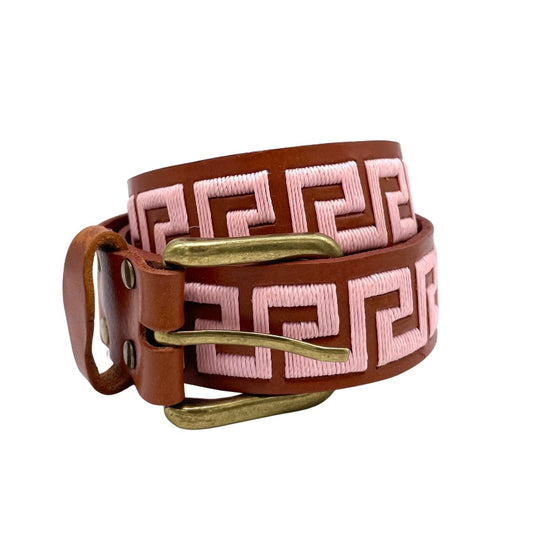
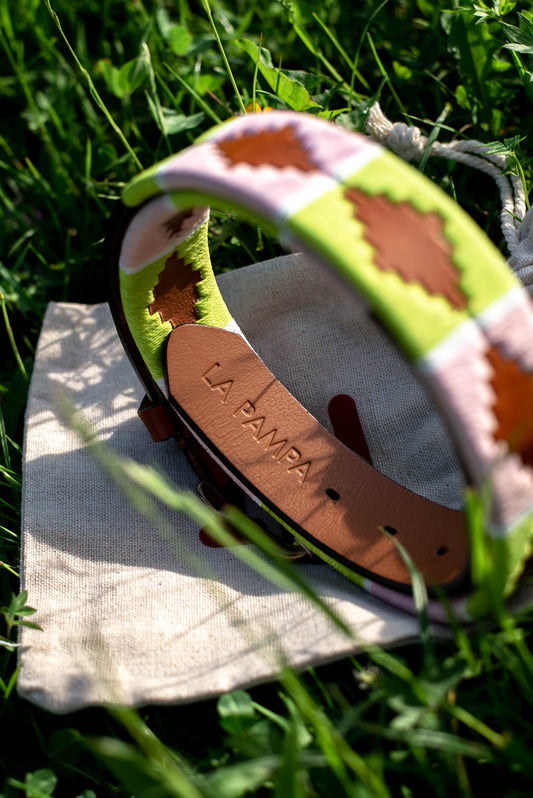
A polo belt needs very little. Wipe it with a soft, slightly damp cloth when it's dirty, let it dry slowly at room temperature if it gets wet, and every few months rub a little colourless leather balm into the plain leather. Keep balm, oil and shoe polish off the stitching, and keep the belt off the radiator.
Most care guides for leather belts are written for plain leather. A polo belt is two materials: stirrup leather and a dense layer of waxed nylon thread on top. What's good for one isn't always good for the other, and that's the reason for most of the advice below.
The first weeks
A new polo belt is stiff. Our standard belts are 5 mm thick stirrup leather, the same leather used for the straps that hold a saddle's stirrups, and it takes a few weeks of wearing before it curves easily around you. You don't need to do anything to speed that up. Wear it, and the hole you use most will soften first. Don't soak the belt, roll it tightly or bend it back on itself to break it in; that leaves creases in the stitching.
Cleaning it
Dust and everyday dirt come off with a soft cloth. For anything more, use a cloth that's damp, not wet, and wipe along the belt rather than scrubbing across the stitches. Let it dry in the air afterwards.
If you ride, you probably have saddle soap. It works on the plain leather at the end of the belt and on the back: a little lather on a sponge, wipe, then take the soap off with a damp cloth. Keep the foam away from the stitched side, where it settles between the threads and dries white.
When it gets wet
Rain or a sweaty day at the stables won't harm the belt. Nylon doesn't rot and the wax in the thread sheds water. The leather is what needs attention:
- Pat it dry with a towel.
- Let it dry slowly at room temperature, hanging from the buckle or lying flat.
- No radiator, no hairdryer, no sunny windowsill. Fast heat makes leather hard and can make it crack.
- Once it's completely dry, and only then, give the plain leather a little balm.
Leather balm: which one, how often, where
Use a colourless leather balm or leather wax. A pea-sized amount on a soft cloth covers a whole belt. Rub it into the back of the belt and the plain leather at the tip, let it soak in for a few minutes and buff off what's left. Try it on a hidden spot first, because vegetable-tanned leather often goes a shade darker when it takes up balm.
Every three to six months is plenty, or whenever the leather looks dry and pale. More isn't better: too much balm makes the leather soft and floppy and collects dirt.
Keep it off the stitched front. The thread doesn't need it, and balm that settles between the stitches dulls the colours and attracts dust.
Olive oil, Nivea, Ballistol: what about home remedies?
These come up whenever leather care does, so here's where we stand:
| Product | On a polo belt? |
|---|---|
| Olive oil and other cooking oils | No. Food oils can go rancid in leather and darken it in patches. |
| Nivea or hand cream | Not our choice. It's made for skin, and we haven't tested it on our belts. A proper leather balm costs a few euros. |
| Ballistol | We haven't tested it. If it's what you have, use a few drops on a cloth, only on the plain leather, and try the back first. |
| Coloured shoe polish or cream | No. It rubs into the thread and stains it. |
| Saddle soap | Yes, on the plain leather, for dirt. Keep the lather off the stitching. |
| Washing machine or a bucket of water | Never. |
Looking after the stitching
The thread needs almost nothing. If dust has settled in it, brush it out with a dry, soft toothbrush, along the stitches. A spot of mud comes off with a damp cloth once it has dried.
If a stitch ever comes loose, don't pull at it. Pulling can open the next stitches too. Tuck it back flat, and write to us at support@lapampa.shop with a photo, and we'll tell you what can be done.
Storing it
Hang the belt from its buckle or lay it loosely rolled in a drawer. Avoid long stretches in direct sun, like on a windowsill or the back shelf of a car: strong light slowly fades thread colours. If you're putting a belt away for months, a cotton bag is better than plastic, because leather that can't breathe can get mouldy in a damp room.
How it changes over time
A polo belt doesn't stay the way it came out of the box, and it shouldn't. The leather softens the more you wear it, and over time it may lighten slightly. The thread may fade a touch. The hole you use most stretches a little and darkens. That's the belt taking on its own wear, and it won't affect how long it lasts. If you want to know more about the leather and how the belts are made, read what a polo belt is.

Questions about care
Can I wash a polo belt?
No. Don't put it in the washing machine or in water. Wipe it with a slightly damp cloth and let it dry at room temperature.
How often should I use leather balm?
Every three to six months, or when the leather looks dry. Use a small amount of colourless balm on the plain leather and the back, never on the stitching.
Will the colours fade?
A little, over years, and faster in strong sun. Store the belt out of direct light and the change stays slow.
Can I wear a polo belt in the rain?
Yes. Pat it dry afterwards and let it dry slowly, away from heaters. Once it's dry, a little balm on the plain leather keeps it supple.
What do I do if a stitch comes loose?
Don't pull it. Tuck it back flat and email us a photo at support@lapampa.shop.